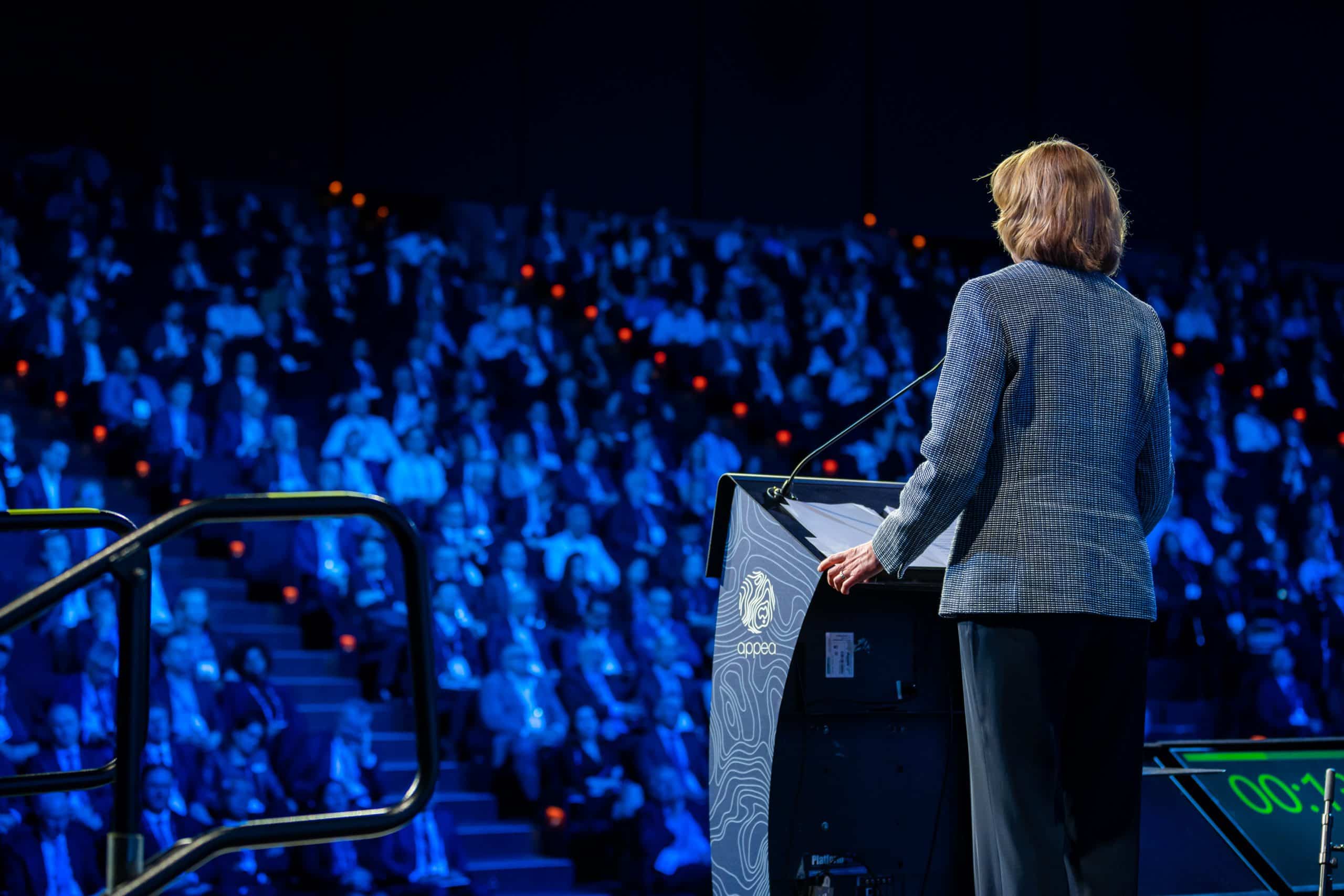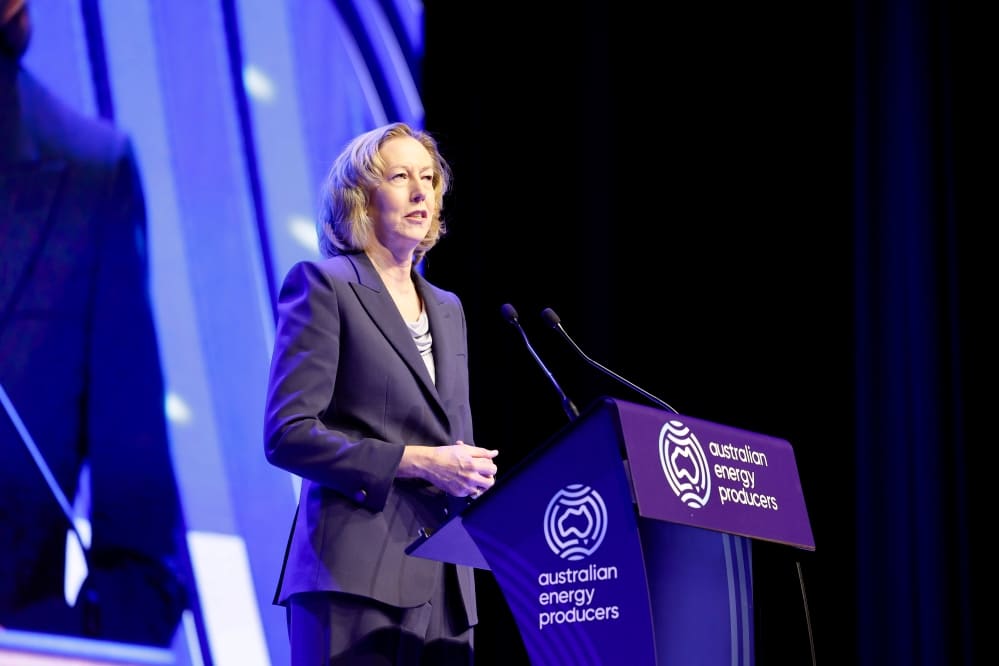

Thank you, Samantha. And thank you, Senator Chisholm for your address. We appreciate your support for our industry, and the constructive engagement with the Albanese Government.
Welcome everyone to the 2026 Australian Energy Producers Conference.
I’d like to begin by acknowledging the Traditional Owners of the land where we meet today, the Kaurna [Gar-na] people, and acknowledge their continuing connection to country. I pay my respects to Aboriginal and Torres Strait Islander cultures and to Elders past and present.
Thank you also to Luke Wilson for that thoughtful Welcome to Country.
And finally, thank you to everyone for joining us here in Adelaide for the biggest and most important week in our industry’s calendar.
It is great to be back in South Australia – a state which, under the leadership of Premier Peter Malinauskas and Treasurer Tom Koutsantonis, is backing the gas industry and its central role in a modern energy system.
As Premier Malinauskas said last year: “For the sake of the economy and our decarbonisation aspirations, our nation needs a lot more gas, and we need it urgently.”
We look forward to hearing from the Premier tomorrow.
Friends, the Australian Energy Producers annual Conference and Exhibition is always a fantastic opportunity to come together as an industry to celebrate our achievements, to reflect on our place in an ever-evolving global energy landscape, and to be proud of our vital role in ensuring Australians and our regional neighbours have secure, reliable and affordable energy.
That role has never been more important.
The Middle East conflict’s impact on global energy markets has brought into stark focus the world’s dependence on oil and gas, which today account for more than half of all global energy consumption.
In Australia, oil and gas meet almost two thirds of our primary energy needs, yet we rely on imports for around 90 per cent of our liquid fuels.
For Australia, the crisis has underscored the enormous advantage of having a strong domestic gas and LNG industry.
Our self-sufficiency in natural gas means that Australia remains insulated from the worst of the energy crisis. The domestic gas market is well supplied, and east coast gas prices are the lowest they’ve been in years, and less than half of international LNG prices.
As well as supporting the energy security of our trade partners when they need it most, Australia’s LNG trade is also playing a central role in bilateral discussions to help secure reliable liquid fuel supply for Australia – as evidenced by recent agreements with Japan, South Korea, Singapore and Malaysia.
As Prime Minister Anthony Albanese said recently, “our gas exports are directly linked to our national fuel security.”
Energy Evolved
This year’s Conference theme, Energy Evolved, is especially timely, amid an increasingly volatile global energy landscape.
Our energy systems are evolving rapidly to adapt to seismic changes in how the world produces and uses energy, to the decarbonisation of energy, transport and industrial sectors, and to ensuring the energy reliability and affordability that are the foundations of progress.
In the years ahead, the world will need more energy, not less. We are in an era of energy addition, not merely energy substitution, and oil and gas will be critical parts of the energy mix for decades to come.
Artificial intelligence is turbo-charging global energy demand in ways few would have predicted a decade ago.
Indeed, the International Energy Agency predicts global electricity consumption from data centres could double by 2030.
And as we’ve seen in recent months – geopolitical shifts can also profoundly impact energy supply, price, and long-term decisions about where our energy comes from.
Supporting new supply
Australia’s national interest is best served when we have a well-supplied, affordable and efficient domestic gas market AND a thriving LNG export industry.
The key to achieving those twin objectives is to increase new supply.
Australia is endowed with abundant oil and gas resources.
Unlocking the full potential of that endowment requires a vibrant, competitive ecosystem – spanning explorers, juniors, mid-caps, service providers, domestic producers and global players – each bringing distinct capabilities, innovation, and access to the capital and technologies that drive progress.
Gas reservation
The Australian Government’s Gas Market Review, and its centrepiece of a domestic reservation scheme, represents the biggest reform to the Australian gas market in more than a decade.
The Review is an opportunity to create a holistic and enduring policy that will restore certainty and unlock investment in the new supply and infrastructure needed to secure our long-term energy future.
To achieve this, any domestic gas reservation must be prospective, carefully calibrated to ensure that it meets both domestic energy needs and reliable supply to our regional trade partners, and, crucially, it must be coupled with immediate action to support investment and the timely delivery of more supply.
It must also provide certainty for Western Australian and the Northern Territory’s LNG operations that are not connected to the east coast market.
As we stand today, the details announced fall well short of those objectives.
It is in everyone’s interests that we work together to design a policy that does not repeat the mistakes of past interventions that have distorted the market, dampened investment, unsettled trade partners, and failed to deliver more supply or lower prices.
A poorly designed or poorly calibrated scheme that results in a structurally oversupplied domestic market or imposes forced sale requirements will undermine investment in new supply and exacerbate future supply shortfalls.
All Australians - customers, producers, workers and communities - lose in that scenario.
The Australian Energy Market Operator’s latest Gas Statement of Opportunities confirming that the east coast gas market is expected to be well supplied until at least 2030, so there is time to get the policy right.
Our industry stands ready to work with the Government and all stakeholders to ensure that, together, we achieve that outcome.
But it must begin with setting the conditions for growing supply, not redistributing an ever-diminishing pie.
Tax debate
Against the backdrop of a global energy crisis, it has been deeply concerning to see aggressive misinformation campaigns aimed at undermining public sentiment about the economic contribution of our industry and attempting to strong-arm the Australian Government into imposing higher taxes on our sector.
We commend Prime Minister Albanese, Treasurer Jim Chalmers and Resources Minister Madeleine King for calling out the misinformation and staring down the reckless campaign to impose a 25 per cent tax on gas exports in last week’s Federal Budget.
I also acknowledge Shadow Minister for Resources, Senator Susan McDonald, for her fierce defence of the facts in this debate.
Through AEP’s advocacy, our industry will also continue to call out misinformation that seeks to downplay our sector’s significant economic and tax contribution, and the essential role of gas in our energy future.
As an industry, we are proud to be Australia’s second largest taxpaying sector, helping governments to fund schools, hospitals, roads and essential services.
The fact is that our existing tax system is already designed to collect more tax when company profits increase, ensuring a fair tax return for Australians.
Last week’s Federal budget confirmed this, forecasting increased company tax and Petroleum Resource Rent Tax revenue over the next five years, thanks in part to higher LNG prices.
We will always be willing to engage in rational, respectful dialogue about how our industry can best serve the national interest in its broadest sense. But what is clear is that many of those calling for higher taxes on the industry aren’t interested in facts.
The loudest voices calling for higher taxes make no secret of wanting to stop new oil and gas projects and ultimately shut down the industry.
In doing so, they are putting Australia’s future energy security at risk.
Recent analysis by Wood Mackenzie found that imposing an additional 25 per cent tax on gas exports would result in an effective tax rate of more than 80 per cent for some projects, rendering Australia uninvestable for new oil and gas projects.
It would amount to a tax on investment, on jobs, and on Australia’s energy security.
Beyond the $21.9 billion in taxes and royalties the industry paid last year, our sector also contributes more than $100 billion a year to the Australian economy and supports around 215,000 jobs.
Last year, I was pleased to join my Queensland colleagues in celebrating a decade of Queensland’s LNG industry.
Over that decade, Queensland’s gas industry added $127 billion to the state economy, supported around 60,000 Queensland jobs, and spent more than $42 billion with local businesses and community groups.
This investment – made possible by access to export markets and global capital – has also delivered new gas supply for the domestic market, and helped avert east coast gas shortfalls.
Our industry has seen similar success stories play out around the country.
Recognising our industry’s achievements
Colleagues, the challenges facing our sector should not detract from your amazing achievements this past year.
Around Australia, we are seeing a marked, positive shift in public support and understanding about the need for more oil and gas to secure our long-term energy needs, and to ensure our country is better prepared to navigate future global energy shocks.
This growing national consensus provides fertile ground for decision makers to deliver meaningful reforms to encourage investment in new oil and gas supply.
Already, we’re seeing green shoots.
In the past year, we’ve had new petroleum exploration acreage released in Victoria, NSW, Queensland, the Northern Territory, and in Commonwealth waters in the Otway and Gippsland basins – a critical first step towards unlocking the next wave of Australia’s future oil and gas supply.
The Beetaloo Basin is on track to deliver first gas later this year.
The Taroom Trough is an exciting, and potentially material, new oil and gas province.
And here in South Australia, the state government is removing the moratorium on hydraulic fracturing in the state’s south-east, while the success of the Moomba CCS project is showcasing Australia’s potential to be a global leader in this essential technology.
Along with the Gorgon CCS project, Australia is now host to two of the largest CO2 storage projects in the world. Combined, these projects are storing emissions equivalent to taking one million cars off the road each year.
All this and more will be needed if Australia is to meet our long-term oil and gas needs.
More support for exploration.
More acreage releases.
And more certainty for investment.
I look forward to hearing more of our industry’s achievements and innovations over the coming days.
Opportunity for growth
It should not take a global energy crisis to recognise the significant strategic and economic advantage Australia holds from having a strong oil, gas and LNG sector.
For decades, Australia’s vast energy resources have provided a major competitive advantage for the nation’s economy.
Reliable and affordable domestic gas has helped underpin the success of many
Australian businesses, especially in mining and manufacturing.
Meanwhile, our LNG industry has made a significant contribution to Australia's prosperity through taxes and royalties, skilled jobs, community support and economic development, while supporting the energy security of our trade partners.
We must avoid the “false choice” between a well-supplied domestic gas market and a strong LNG industry.
Australia’s abundant oil and gas resources, our world-class industry and our proximity to fast-growing markets mean we should strive for both.
Our industry’s strong message to Australian policymakers is that we will continue to play our part in supplying affordable, reliable energy to customers in Australia and the region, while also delivering real emissions reductions across the economy.
Our ask is that they provide the policy stability, internationally competitive settings, and project approval certainty to give our industry confidence to invest.
Now, more than ever, is the time to get behind Australia’s oil and gas industry, to unlock the potential of our abundant natural resources, and ensure that future Australian generations benefit from the jobs, economic return and energy security that our industry is well placed to deliver.
Thank you everyone, I wish you a great conference.
END