
Natural gas and CCUS are essential for reaching net zero
Australian Energy Producers supports the Australian Government’s goal of net zero emissions by 2050.
Our industry is playing an essential role in delivering real emissions reductions in Australia and the region, including through our global leadership in carbon capture, utilisation and storage (CCUS) – a key technology for delivering practical, economy-wide emissions reductions.
The Australian Government’s Future Gas Strategy confirmed, “Under all credible net zero scenarios, natural gas is needed to 2050 and beyond” and “Australia’s geological carbon management market needs to grow to support a least-cost energy transition and grow our economy.i
You can read more about how natural gas is providing reliable electricity to support a growing share of renewables here.

CCUS is essential for Australia to achieve net zero
Carbon capture, utilisation and storage (CCUS) is critical to reaching net zero in Australia.
The Australian Government, Geoscience Australia and the Commonwealth Scientific and Industrial Research Organisation (CSIRO) all recognise the importance of CCUS in delivering real emissions reductions in Australia.
CCUS can reduce emissions in hard-to-abate industries including cement, steel, chemicals and fertiliser production and produce low-carbon hydrogen. It can also remove carbon dioxide from the atmosphere through Direct Air Capture (DACC).
Australia has the potential to be a global leader in CCUS, with our world-class CO2 storage resources and a wealth of CCUS skills and experience in the oil and gas industry.
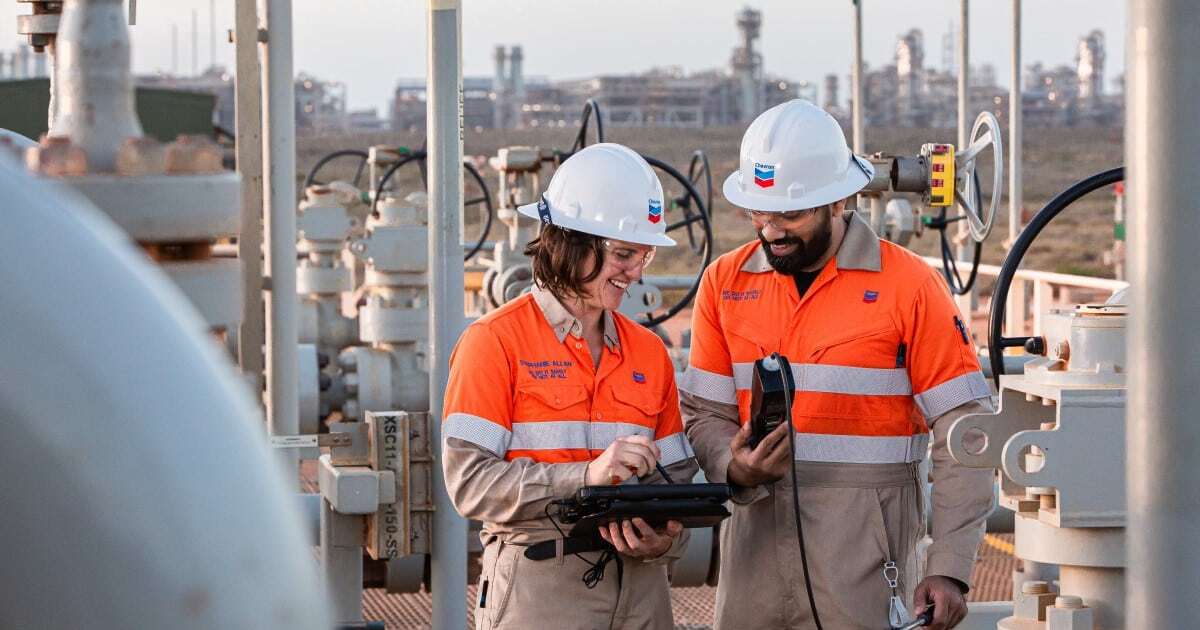
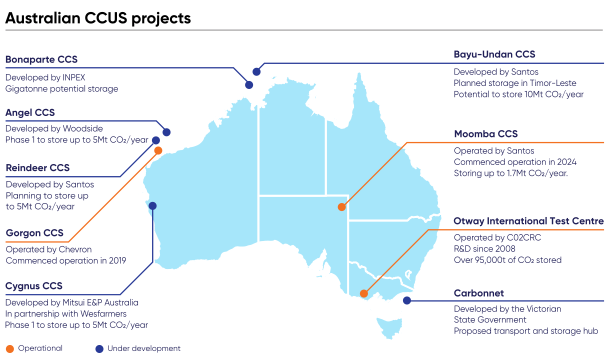
Australia is already home to two of the world’s largest CCUS projects: the Santos and Beach Energy Moomba project and Chevron’s Gorgon CCS project. Combined, these two projects are storing emissions equivalent to taking one million cars off the road each year.
Several more CCUS projects are under development around Australia and could be operating by 2030.
A proven, safe and scalable technology
CCUS has more than 25 years of proven operational history globally. Today there are 50 large-scale CCUS projects operating around the world, with the capacity to capture 51 million tonnes (Mt) of CO2 per yearii – equivalent to over 10% of Australia’s total greenhouse gas emissions.
One of the world’s longest-running projects, Norway’s Sleipner CCS facility, has safely stored up to one million tonnes of carbon dioxide per year since 1996iii, demonstrating the long-term reliability of geological storage.
The International Energy Agency (IEA), Intergovernmental Panel on Climate Change (IPCC) and the International Renewable Energy Agency are all clear that CCUS will play a critical role in achieving net zero by 2050.
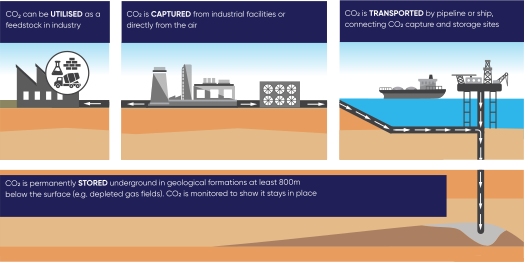
How Does CCUS Work?
CCUS involves the capture of CO2 from industry or directly from the air. The CO2 is transported to where it can be safely and permanently stored in a suitable geological formation deep underground. Some captured CO2 can be used by industry, including in chemical and cement production.